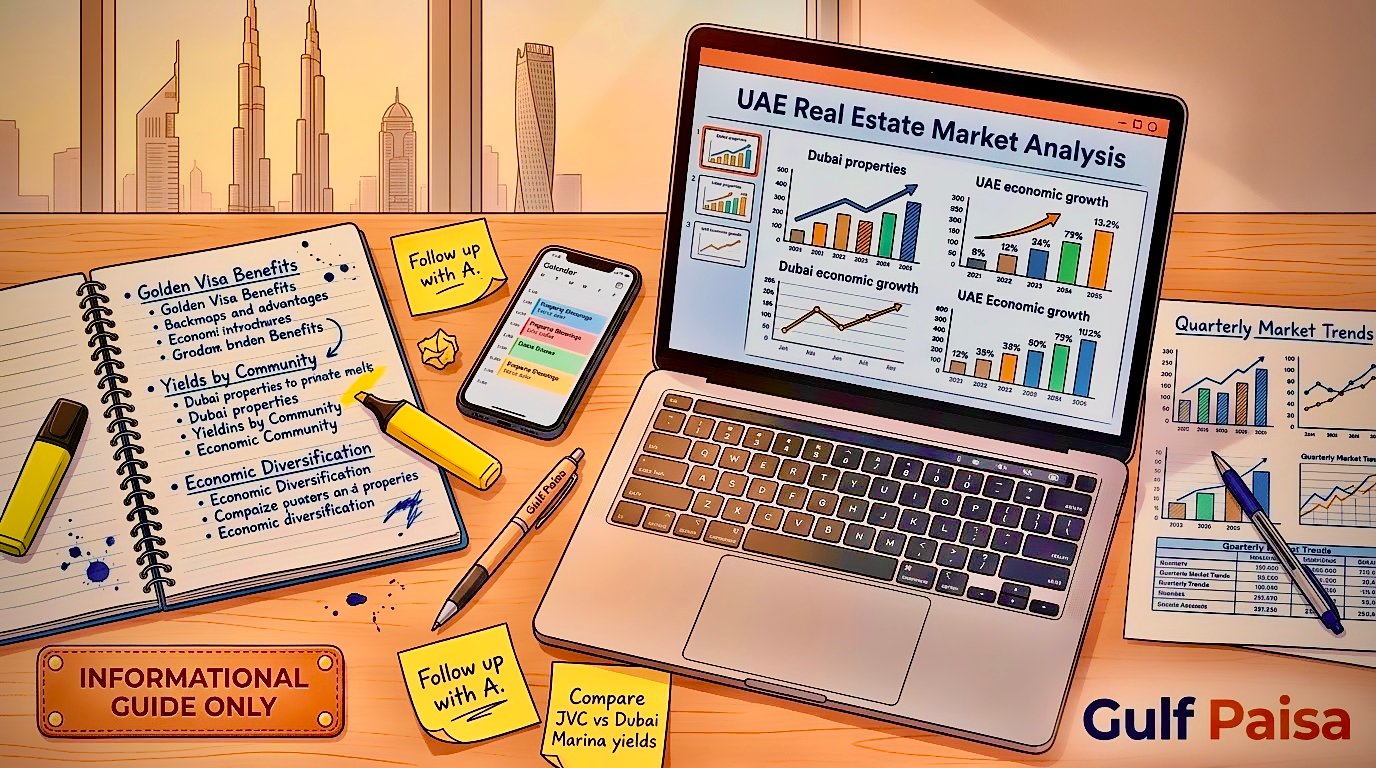
A few years ago, I spent an entire evening scrolling through online forums and reading news headlines about foreign property markets. Local inflation was steadily eroding savings, and traditional investment channels felt stagnant.
Like many people searching for stability and long-term opportunity, my focus eventually landed on the United Arab Emirates (UAE).
Initially, I remained skeptical. Was the UAE property boom just clever marketing aimed at high-net-worth investors? Or was there a genuine, sustainable economic system powering this growth?
After digging through official economic data, market updates, and regulatory frameworks, the picture became much clearer. Here is a realistic, grounded breakdown of how the UAE established itself as a major global hub for business and real estate.
Moving Beyond the Oil Era
For decades, international perceptions of the Gulf region centered almost entirely on oil. However, the UAE leadership executed a deliberate, multi-decade strategy to diversify its national revenue.
Today, non-oil sectors drive the vast majority of the country’s Gross Domestic Product (GDP). Key contributors include logistics, aviation, tourism, financial services, and property development.
Geographically, the UAE sits at a major crossroads, connecting businesses to two-thirds of the world’s population within an eight-hour flight. Combined with zero personal income tax and world-class shipping ports like Jebel Ali, the country built an environment where international trade thrives naturally.
Real Estate Market Dynamics: Yields, Demand, and Residency
When evaluating property markets anywhere in the world, rental yield remains a fundamental metric.
In many established Western capitals, net rental yields often average between 2% and 4%. By contrast, prime residential communities across Dubai and Abu Dhabi have historically yielded between 6% and 8% on average, depending on the asset class and location.
| Location | Market Characteristics |
|---|---|
| Downtown Dubai & Marina | High rental demand, expatriate professional hub |
| Jumeirah Village Circle (JVC) | High yield efficiency, accessible entry points |
| Ras Al Khaimah (RAK) | Emerging tourism, luxury resorts, and coastal projects |
The Impact of the 10-Year Golden Visa
In the past, living in the UAE was strictly linked to short-term employment visas. The launch of the 10-Year Golden Visa fundamentally shifted this structure.
By meeting qualifying real estate investment thresholds (such as AED 2 Million in property value), investors can secure long-term residency for themselves and their immediate families. This single policy transformed short-term expatriate stays into long-term community roots.
Staying Informed with Gulf Paisa
Understanding foreign exchange rates, local corporate rules, and regional property updates requires reliable information. Keeping up with market trends helps people make well-informed observations.
That is where Gulf Paisa comes in. Gulf Paisa focuses on delivering educational content, factual market updates, and awareness guides regarding business and economy trends across the Gulf region.
Important Disclaimer: The content published on Gulf Paisa and throughout this article is strictly for general informational and educational purposes only. It does not constitute financial, investment, legal, or professional advice. Readers should perform independent research and consult certified financial advisors before making any personal financial or business commitments.
Commercial Business Setup: Free Zones vs. Mainland
If you are exploring business opportunities in the UAE, understanding corporate structures is essential. Foreign business owners typically choose between two main pathways:
- Free Zone Companies: Ideal for tech startups, regional consultancies, and export-focused businesses. They offer 100% foreign ownership, full profit repatriation, and zero corporate tax on eligible earnings.
- Mainland Companies: Essential for businesses that want to trade directly within the local UAE commercial market or bid on government contracts.
Government initiatives have also digitalized company setup. Digital business portals and streamlined bank account procedures have significantly reduced startup friction for foreign entrepreneurs.
Real Market Factors and Risk Considerations
No market moves upward in a straight line. An objective perspective requires looking at potential risk factors alongside growth opportunities:
- Global Interest Rate Changes: The UAE Dirham (AED) is pegged to the US Dollar. As a result, local mortgage rates follow US Federal Reserve policy changes, which can temporarily cool home-buying demand.
- Supply Cycle Delivery: Construction in major UAE cities moves fast. Concentrated property handovers can lead to temporary market corrections in purchase prices and rental rates.
- Developer Credentials: When considering off-plan (under-construction) property, protecting your capital depends on picking established developers with verified delivery records.
A Practical Evaluation Framework
If you are researching the UAE market for business or property awareness, keep this straightforward framework in mind:
- Set Clear Goals: Distinguish between long-term capital growth objectives and regular rental cash-flow needs.
- Understand Off-Plan Protections: Make sure off-plan payments are deposited directly into government-regulated Escrow Accounts managed by official authorities like Dubai’s Real Estate Regulatory Agency (RERA).
- Work with Verified Professionals: Ensure any real estate broker or business consultant you speak with holds active government registration.
Final Thoughts
The UAE’s emergence as a major global trade hub is the result of clear planning, heavy infrastructure spending, and business-friendly regulations. By reducing red tape and offering long-term residency pathways, the country continues to attract global interest.
Whether you are monitoring regional trade trends or studying international real estate markets, staying grounded in verified facts is always the best approach. Visit Gulf Paisa to stay updated on economic news, business frameworks, and market developments across the region.