Moving to or living in the United Arab Emirates comes with an incredible lifestyle, modern infrastructure, and year-round sunshine. However, if you are wondering how to cut your DEWA bill during the hot summer months, you are not alone. When your July or August electricity bill hits your inbox, the final number can feel overwhelming.
Learning how to cut your DEWA bill is essential for every resident in the UAE.
Whether you live in Dubai with DEWA, in Sharjah with SEWA, or in the Northern Emirates powered by FEWA (Etihad WE), high energy bills are a common challenge. Most people assume that paying massive power bills is simply the price you pay for staying cool in the desert heat.
The good news is that you do not have to accept huge monthly expenses. By making a few smart, research-backed adjustments around your apartment or villa, you can lower your electricity and water consumption by 30% to 40% without giving up your indoor comfort.
In this detailed guide, we break down simple and proven strategies to help you optimize your home’s energy use. If you want to learn more practical money-saving ideas and stay updated on everyday resident solutions in the region, check out Gulf Paisa—an informative portal built to raise everyday awareness and help residents make well-informed decisions.
Please note: The information on Gulf Paisa is created solely for general awareness and educational guidance. It should never be taken as formal financial, engineering, or legal advice.
Understanding Your Utility Bills in the UAE
Before changing your habits, it helps to know how energy and water are measured and billed across the different emirates:
- DEWA (Dubai Electricity and Water Authority): Serves all residents in Dubai. It uses a tiered slab tariff structure where your rate per unit goes up as your monthly usage increases.
- FEWA / Etihad WE (Federal Electricity and Water Authority): Serves residents in Ajman, Ras Al Kaimah, Fujairah, and Umm Al Quwain.
- SEWA (Sharjah Electricity, Water and Gas Authority): Supplies electricity, piped gas, and water to households in Sharjah.
Despite small differences in how each authority structure their tariffs, one fact remains identical across the UAE: Air conditioning accounts for the vast majority of your monthly electricity expense, followed by water heating and major kitchen appliances.
1. How to Cut Your DEWA Bill with Air Conditioning Efficiency
In the UAE’s extreme summer climate, air conditioning systems consume roughly 60% to 70% of an average household’s total monthly power output. If you want to make a real dent in your utility bill, optimizing your AC setup is the single best place to start.
Simple daily habits are the key when figuring out how to cut your DEWA bill effectively.
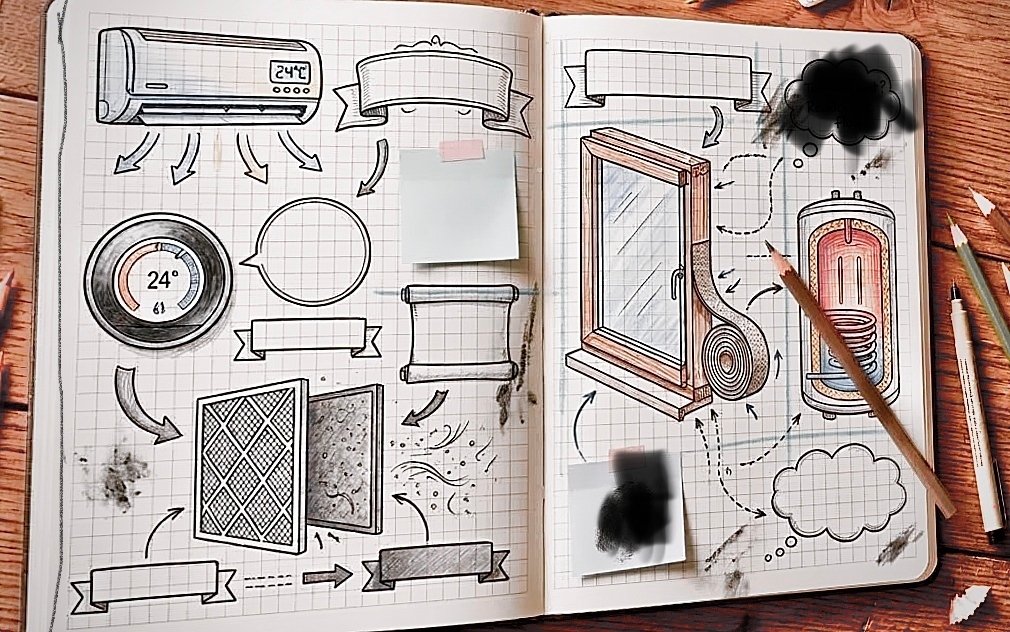
The Power of the 24°C Setting
When coming home after a long day in the sun, many people set their AC thermostat to 18°C or 20°C, believing it cools the room faster.
In reality, an AC unit runs at the same speed regardless of the target temperature on the display. Setting it to 18°C simply forces the compressor to run continuously for hours without stopping, consuming massive amounts of power.
International HVAC experts and local utility authorities strongly advise keeping your thermostat set to 24°C (75°F).
- Setting your AC to 24°C provides a healthy, comfortable indoor environment.
- According to DEWA research, every single degree you increase your thermostat setting saves up to 6% to 8% on your overall cooling energy costs.
Upgrade to a Smart Thermostat
Leaving your AC running at full blast while you are at work wastes a huge amount of energy. On the flip side, switching it off completely during peak summer can turn your apartment into an oven, making it harder to cool down later in the evening.
Installing a programmable smart thermostat solves this issue. These devices let you create custom cooling schedules using a mobile application. You can set the AC to a higher temperature (like 27°C) while you are away at work, and program it to return to 24°C fifteen minutes before you walk through the door.
Clean Your Air Filters Monthly
Air conditioner vents collect sand, dust, and lint over time. When your filters are clogged with dust, your cooling unit has to draw significantly more power to force air through the dirt.
Take ten minutes every month to remove your return air filters, rinse them clean under a tap, let them air-dry completely, and put them back. This small habit improves airflow, protects your indoor air quality, and keeps your system running smoothly.
2. Sealing Windows and Doors: Stop Cold Air Leaks
Even if your air conditioner runs efficiently, it will still draw unnecessary power if cold air is leaking out of your home while hot desert air slips inside.
Install Rubber Weather Stripping
Gaps along sliding glass balcony doors and window frames are the biggest culprits for cooling loss. You can buy self-adhesive rubber weather strips at any local hardware store for a modest price. Stick these strips along the edges of doors and windows to create an airtight seal that keeps cold air right where it belongs.
Use Blackout Curtains and Window Tinting
Direct sunlight passing through glass windows creates a greenhouse effect inside rooms, raising the indoor temperature quickly.
- Keep thick blackout curtains drawn during peak afternoon hours (between 12:00 PM and 4:00 PM) to block solar heat.
- If you live in a villa or an apartment with floor-to-ceiling glass panels, consider applying ceramic window tinting film. High-quality window films block up to 70% of outdoor solar heat without cutting off your view.
Direct Energy Savings Summary
Here is a quick snapshot showing how much you can save by taking these practical steps around your house:
| Energy-Saving Step | Upfront Effort & Cost | Estimated Monthly Savings | Recovery Time |
|---|---|---|---|
| Set AC to 24°C | Zero Cost | 10% to 15% | Instant |
| Weather Stripping | Low Cost (~50 – 100 AED) | 8% to 12% | 1 Month |
| Smart Thermostat | Medium Cost (~400 – 600 AED) | 15% to 20% | 4 to 6 Months |
| Switch to LED Bulbs | Low Cost (~100 – 150 AED) | 5% to 8% | 2 Months |
| Turn Off Water Heater in Summer | Zero Cost | 5% to 10% | Instant |
3. Lighting and Standby Power: Eliminate “Vampire Draw”
Individual light bulbs and home electronics might seem small compared to a central air conditioner, but they run continuously and add up to a noticeable part of your monthly bill over a full year.
Switch All Bulbs to LED
Legacy halogen spotlight bulbs consume a lot of electricity and convert most of that power into raw heat. That extra heat warms up your ceiling, forcing your air conditioner to work even harder to compensate.
Replace old halogen bulbs with energy-efficient LED (Light Emitting Diode) bulbs. LEDs use 75% to 80% less power, last much longer, and generate almost no heat.
Turn Off Standby Devices
Do you leave your television, game consoles, microwave, or laptop chargers plugged into live sockets 24 hours a day?
Even when turned off, electronics draw small amounts of electricity continuously as long as they stay plugged in. This power draw is known as “Phantom Load” or “Vampire Power.”
To stop this wasted electricity, use smart power extension strips with a main power switch. That way, you can turn off all connected entertainment systems with a single flick of a switch before going to sleep.
4. Water Heaters and Water Conservation Measures
In the UAE, water and electricity charges are combined into one monthly statement. Managing your water consumption directly reduces your overall bill.
Manage Water Heaters Seasonally
During the hot summer months, water stored in rooftop tanks gets warm naturally. As a result, you rarely need to heat your water for daily showers, dishwashing, or laundry.
- Summer Setting: Switch off the main wall breaker for your water heater completely from May through October.
- Winter Setting: In the winter months, install a digital timer switch on your water heater. Program it to run for just 1 to 2 hours early in the morning instead of leaving it heating water all day and night.
Attach Low-Flow Aerators
Water aerators are small mesh caps that screw onto the end of sink faucets and showerheads. They mix air into the water stream, keeping the water pressure strong while cutting water volume by up to 30%. Using less water lowers both your direct consumption fees and the drainage fees linked to your monthly bill.
5. Check the ESMA Energy Rating Stars Before Buying
When buying new appliances for your home—like a refrigerator, washing machine, or microwave—never look only at the initial sale price.
The Emirates Authority for Standardization and Metrology (ESMA) places a bright Star Rating label on major home appliances sold across the UAE:
- 5-Star Rating: Highest energy efficiency (lowest power usage).
- 1-Star Rating: Lowest energy efficiency (highest power usage).
While a 5-Star rated refrigerator might cost a bit more up front, its energy-efficient inverter compressor will save you money on every single bill, recovering that extra cost in just a few months.
6. Long-Term Solutions for Villa Owners: Rooftop Solar
If you own a villa in Dubai, you can take advantage of government initiatives like DEWA’s Shams Dubai program.
This initiative allows homeowners to install solar panels on their roofs. The solar panels produce clean electricity during the daytime to power your home directly. Any extra power you produce gets sent back to the main grid, earning you credits that decrease your future monthly bills.
Final Thoughts: Take Control of Your Energy Usage
Lowering your home energy expenses in the UAE does not mean living uncomfortably. It is simply about making smart, conscious adjustments and fixing hidden energy leaks around your living space.
You do not need to fix everything at once. Start with a few basic steps today:
- Set your AC thermostat to 24°C.
- Check your window seals for cool air drafts.
- Switch off your water heater circuit during the summer.
Making these small daily changes will help protect the environment and keep more of your hard-earned money in your wallet. For more helpful lifestyle guides, consumer insights, and awareness content, feel free to explore Gulf Paisa.
For official utility tariffs and guidelines, visit the official DEWA Website.
⚠️ Important Disclaimer
The information presented in this article is written strictly for general educational, awareness, and informational purposes. Gulf Paisa does not provide financial, engineering, legal, or professional utility management advice. Individual savings may vary depending on your home layout, family size, usage patterns, and seasonal weather changes. For official utility rules, rates, and policies, please refer directly to your local service provider (DEWA, FEWA/Etihad WE, or SEWA).